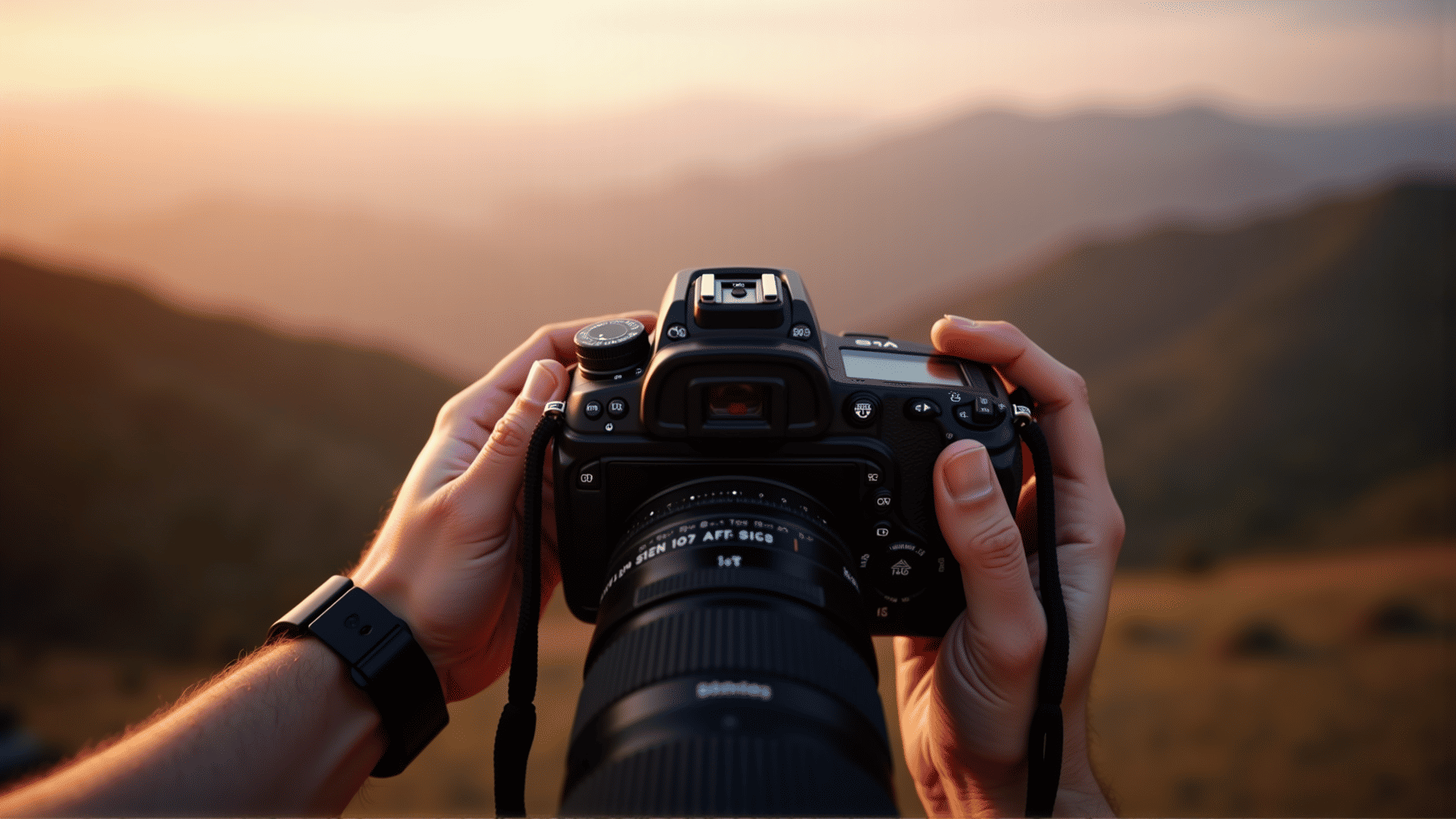
Capturing stunning photographs involves mastering your camera settings, which allows you to create images that truly reflect your vision. Understanding the interplay between shutter speed, ISO, and aperture is crucial in achieving the desired exposure and aesthetic for your photos.
Shutter Speed is the length of time your camera's sensor is exposed to light. A fast shutter speed can freeze motion, perfect for capturing fast-moving subjects like wildlife or sports. Conversely, a slow shutter speed can introduce motion blur, which is useful for artistic effects or low-light situations. Experimenting with different speeds can lead to creative results, whether you are looking to freeze a moment in time or capture the fluidity of movement.
ISO determines the sensitivity of your camera's sensor to light. A lower ISO value is ideal for bright conditions, ensuring a clean image with minimal noise. When shooting in low-light situations, a higher ISO can be used to brighten the image, albeit with an increased chance of graininess. Finding the right balance is essential to maintaining image quality; often, it's a trade-off between noise and visibility.
Aperture is the size of the opening in the lens through which light enters. It is measured in f-stops, with a larger aperture (lower f-stop number) allowing more light in and providing a shallow depth of field. This effect can beautifully isolate your subject against a blurred background. Conversely, a smaller aperture (higher f-stop number) can bring more of the scene into focus, which is beneficial for landscape photography.
Balancing The Triangle: Shutter speed, ISO, and aperture form the exposure triangle, each affecting the others. By adjusting one setting, you often need to compensate with the other two to maintain proper exposure. For instance, if you opt for a faster shutter speed to capture action, you might need to widen the aperture or increase the ISO to let in more light. Practice is key to seamlessly adjusting these settings based on your shooting environment and creative intent.
For those new to manual settings, starting in aperture priority or shutter priority modes can be helpful. These semi-automatic modes allow you to control one setting while the camera automatically adjusts the others. This way, you can slowly build confidence in controlling your camera fully in manual mode.
Beyond technical mastery, successful photography requires an artistic vision. Composition and understanding light play significant roles in elevating your photographs. Experiment with different lighting conditions and composition techniques to find your unique style.
In conclusion, mastering your camera settings is an empowering journey that can transform your photography. With practice and creativity, you can capture images that are not only visually striking but also meaningful to you and your audience.